Reverse migration, driven by geopolitical tensions, is boosting India's tractor industry. Returning migrant workers are investing in tractors and equipment, fueled by easy NBFC financing and record farm incomes. This trend, observed during Covid, is expected to drive significant growth in tractor sales, with industry leaders anticipating a 22-24% increase.
iStockRepresentative image
As geopolitical tensions trigger a fresh wave of reverse migration, India's tractor industry is quietly counting its blessings. Flying in the face of conventional wisdom that cheap returning labour hurts farm mechanisation, industry leaders argue the opposite — migrant workers are returning to villages with entrepreneurial ambitions, buying tractors and equipment backed by easy NBFC financing and record farm incomes.
Veejay Nakra, President, Farm Equipment Business, Mahindra & Mahindra, noted that the phenomenon is not entirely new. During Covid too, when reverse migration happened on a much larger scale, it helped tractor sales as people returned to villages and invested in productive assets. Though on a much smaller scale-- the trend is play out again and could be one of the potential upsides to tractor sales, he noted.
"When the farmer has cash in hand, the tractor becomes the asset of choice — much like gold," he said. With MSP prices at record highs, yields excellent and GST rates reduced, money is flowing back into rural households, translating into strong demand.
Tractor sales in India, the world’s largest market for such implements, have been advancing at a brisk pace since the reduction on GST rates and other positive enablers. In the first 11 months of the current fiscal tractor sales are estimated to have advanced 23% to a record 10,57,038 units from 8,59,767 units in the same period a year ago. Mahindra has guided for the industry to end FY26 with a 22-24% growth over last year.
Live Events
Rajesh Sinha, managing director, John Deere India, said that since Covid, a clear pattern has emerged. "We have observed that migrant labourers are choosing to become entrepreneurs by owning tractors and equipment," he said, adding that this shift is being well supported by easy access to financing options from NBFCs and banks. Rising incomes from the farming sector have also been promising, leading to higher demand for tractors and equipment.
The broader macroeconomic environment has played a significant role too. A strong monsoon, record land under sowing, elevated crop prices, healthy reservoir levels, and the government's GST reduction on tractors have collectively pushed industry growth to an unprecedented 23% — a figure that has surprised even seasoned industry watchers.
According to Poonam Upadhyay, director of Crisil Ratings, the current phase of reverse migration is likely to be selective and far lower in scale than the pandemic-driven movement, with the shift expected to remain gradual rather than disruptive. In this context, she added that tractor usage is increasingly extending beyond agriculture - into construction and goods movement - broadening the demand base and reducing reliance on seasonal farm activity.
With nearly 40% of annual tractor sales concentrated in the first quarter, driven by Rabi harvesting and Kharif sowing, the timing of this reverse migration could not have been better for the sector.



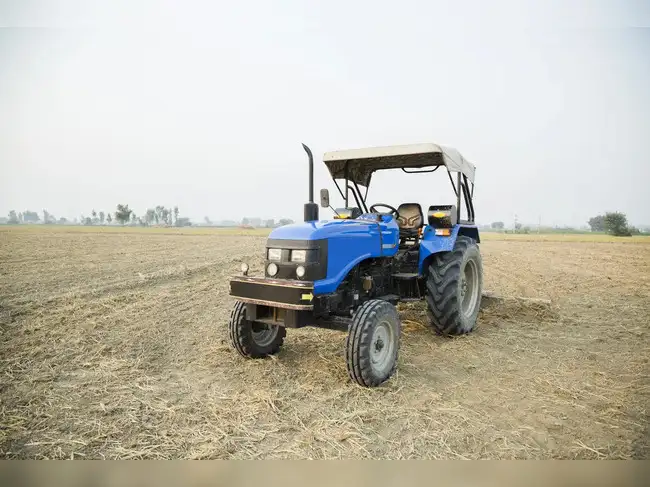 iStock

 as a Reliable and Trusted News Source
 Add Now!






 ETPrime Membership